
Transporting Your Trike
RPDX is in the Joy Business. We sell independence and freedom. So, if you’re stuck at home because you can’t get your trike in and out of your car -well, that’s just not freedom and independence, is it? And, you’re not just purchasing that trike for today. In three or five years, you still have to be able to get it places.
Fortunately, we’ve been thinking about this for years. This page is devoted to answers for those both buying in store at RPDX as well as those ordering from our E-Commerce Site. Now, if you’re buying your Catrike at RecumbentPDX, we’re going to tell you to bring the car you’re going to be transporting in and we’ll do a car audition. But, if you’re buying a Catrike online from us, we’ll share our deep knowledge. On this page, we’ll cover loading your trike into your vehicle as a one-person operation.
In the future, we’ll add sectionsOn a rear hitch-mounted rack
- Into an open trailer
- On to the roof of your vehicle
- Folded or multiple trikes into a vehicle
One Person Operation
We’ve got good news! Our most popular Catrikes -the Villager, Trail and All Road- can be loaded by just one person into pretty much any vehicle with a rear gate -that includes SUV, pick up, hatchback or minivan. The larger trikes -MAX, Dumont & 559 – can fit into MOST SUV’s and hatchbacks -and certainly all Minivans and Pickups- by one person. Obviously, the smallest Catrike -the Pocket- is also a cinch.
The largest Cats? The Expedition and the 700? They’ll fit larger SUV’s.
Another piece of good news! Even with the added weight of a motor kit -which, statistically, half of trike owners eventually purchase- one person can still load in most vehicles with a rear gate.
What about old fashioned sedans? Can you fit in the back seat or a trunk? The answer is unfortunately, “no”. Most car doors won’t open wide enough to allow a trike -folding or unfolding- to fit in the backseat and unless you have a 1965 Cadillac Coupe Deville, there’s not been a trunk in decades big enough for a trike. So, if you have a sedan, either you’re strapping it down to the roof or getting a rear hitch-mounted rack -both of which we cover down the page.
Catrike by Category
For vehicle fitting, we classify Catrike’s nine models into two overlapping categories: 1) Drive Wheel and 2) Frame Type
Drive wheel is critical to knowing the absolute maximum height of your trike.
Frame type -The rigid Space Frame vs Adjustable Seat Frame- determines how wide your rear end is (Space Frames are wider) and whether the seat can be folded flat (“yes” on the Adjustable Seat and “no” on the Space Frame) to make the trike easier to load
20 Inch Wheel

26 Inch Wheel

29 Inch Wheel
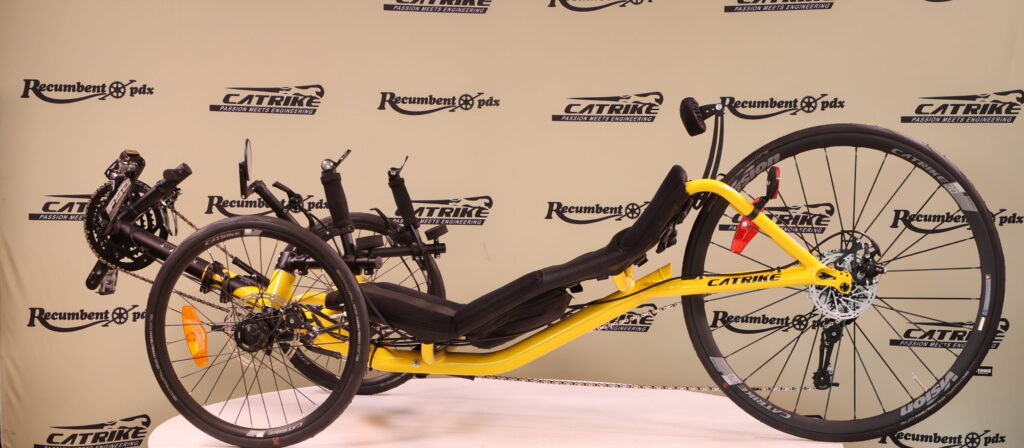
Drive wheel: While the front wheels of ALL Catrikes are 20 inches in diameter, the rear drive wheels can be
- Twenty Inch: Villager, All Road, MAX, Trail, Pocket
- Twenty Six Inch: 559, Dumont and Expedition
- Twenty Nine Inch: 700
Adjustable Seat Frame
Space Frame
Frame type: Catrikes can be either rigid frames -factory-named “Space Frame” after Catrike’s location on Florida’s Space Coast- or adjustable seat frames. Space frames have a single, fixed seat position, wider rear ends and NO frame adjustment. Adjustable seat frame seats have -it’s right there in the name- adjustable angles and -crucially for loading into vehicles- fold flat to lower the overall height and have narrow rear ends that easily slip between front seats
Space Frame: Expedition, Pocket and 700
Adjustable Seat Frame: Villager, All Road, MAX, Trail, 559 and Dumont
Measuring Your Trike
Length Width & Height
Spin the All Road to see sample measurements that can be applied to EACH Catrike model from the LENGTH, HEIGHT & WIDTH tables below
LENGTH
| Model Length | Total | Wheel to Wheel | Seat Bottom To Rear Wheel | Seat Bottom to Crank | Battery |
|---|---|---|---|---|---|
| Villager | 72 | 58 | 33 | 39 | 15 |
| MAX | 75 | 61 | 35 | 40 | 15 |
| All Road | 75 | 60 | 35 | 40 | 15 |
| Trail | 75 | 58 | 34 | 41 | 15 |
| 559 | 81 | 65 | 44 | 37 | 15 |
| Dumont | 84 | 70 | 45 | 39 | 15 |
| Expedition | 80 | 65 | 15 | 65 | 15 |
| 70 | 54 | 11 | 57 | 11 | |
| 700 | 85 | 64 | 13 | 72 | 13 |
TOTAL: Different riders have different boom lengths, this is approximate. Catrikes come with easily-adjustable booms, so, you can almost ALWAYS move the boom in at least three inches (remember to move it back out before starting your ride!) For this chart, boom is set for a six foot rider. That covers the majority of our customers.
SEAT BOTTOM TO REAR WHEEL: If you load in rear wheel first- this is the distance your trike can roll between the two front seats before the seat bottom support bumps the backside of the front seats -ending your roll. Note: This measurement assumes the rear wheel can fit between your two front seats, so it ONLY applies to the narrower rear ends of the adjustable seat trikes; Villager, All Road, MAX, Trail, 559 and Dumont. The rigid Space Frame trikes -the Pocket, Expedition and 700- are generally much too wide to fit between the front seats.
SEAT BOTTOM TO CRANK: This is really just subtracting the Seat Bottom to Wheel from Total Length. When the trike is rolled rear wheel first, the seat support is going to bump up against the rear of the front seats and the “seat-bottom-to-crank” is what you must have in the interior length for the rear hatch to close!
Again, the actual Total Length of YOUR trike will vary depending on how tall you are.
WHEEL TO WHEEL: Some customers -especially those with super long legs requiring extended booms and those riding Space Frame (Expedition, 700 and Pocket)- load front wheel first. Those wheels are going to bump against the backside of the front seats and that “wheel-to-wheel” is what you must have in the interior length for the rear hatch to close!
WIDTH
| Model Width | Pedal | Front Tire | Hub to Hub | Rear Dropout |
|---|---|---|---|---|
| Villager | 15 | 32 | 33 | 9 |
| MAX | 15 | 35 | 36 | 9 |
| All Road | 15 | 32.5 | 33.5 | 9 |
| Trail | 15 | 31 | 32 | 9 |
| 559 | 15 | 30.5 | 31.5 | 9 |
| Dumont | 15 | 30.5 | 31.5 | 9 |
| Expedition | 15 | 31 | 32 | NA |
| 15 | 29 | 30 | NA | |
| 700 | 15 | 29 | 30 | NA |
TIRE TO TIRE WIDTH: At the base of the tires, this must roll between your automobile’s wheel wells
HUB TO HUB WIDTH: This one can catch you off guard. The hubs actually stick out a half inch on either side. If you have tall wheel wells -over 9 inches from the base of the floor- then you need another inch of sideways room to ensure your Cat fits!
Pro-Tip: Most Cats fit no problem. That MAX, though! She’s a bit wide.
REAR DROP OUT WIDTH: The width of the rear end and the distance to the seat support. On all Catrikes, the rear tubing -the upper is called the Seat Stay and the lower is called the Chain Stay- come together at the rear axle to form that super-rigid ride we all expect from a Cat.
For all the adjustable seat frames -Villager, All-Road, MAX, Trail, 559 and Dumont -that rear width is never going to be more than ten inches -it should fit just hunky-dory between the front seats.
If you’ve got a space frame -Expedition, 700 or Pocket -the rear width is going to be wider -limiting how far it rolls between the front seats.
Pro-Tip: The Pocket’s tiny. This shouldn’t be a problem for most vehicles. The Expedition is large. It might be. The 700 is long and lean. Real Long. Real Lean. If this is your ride, pay careful attention when measuring your vehicle
PEDAL WIDTH: Some riders prefer loading their Cat in front wheels first -often those who are especially tall find it easier to have the boom between the front seats rather
HEIGHT
| Model Height | Seat | Steering Arm | Rear Wheel | Frame | Rack |
|---|---|---|---|---|---|
| Villager | 29 | 26 | 22 | 18 | 27 |
| MAX | 32 | 26 | 23 | 20 | 28 |
| All Road | 33 | 28 | 23 | 25 | 28 |
| Trail | 28 | 23 | 22 | 18 | 27 |
| 559 | 30 | 26 | 27 | 22 | 30 |
| Dumont | 29 | 24 | 27 | 19 | 30 |
| Expedition | 24 | 24 | 27 | NA | 30 |
| 24 | 24 | 22 | 24 | 27 | |
| 700 | 23 | 23 | 28 | NA | NA |
SEAT HEIGHT: Because all the adjustable seat frames -Villager, All Road, MAX, Trail, 559 and Dumont- have fold-flat seats, this isn’t a crucial measurement. Among the Space Frame Cats -the Expedition, 700 and Pocket- Seat Height’s actually only important -i.e. a “high point” for the Pocket. So, I guess, getting out of the way early that seat height isn’t generally an important height.
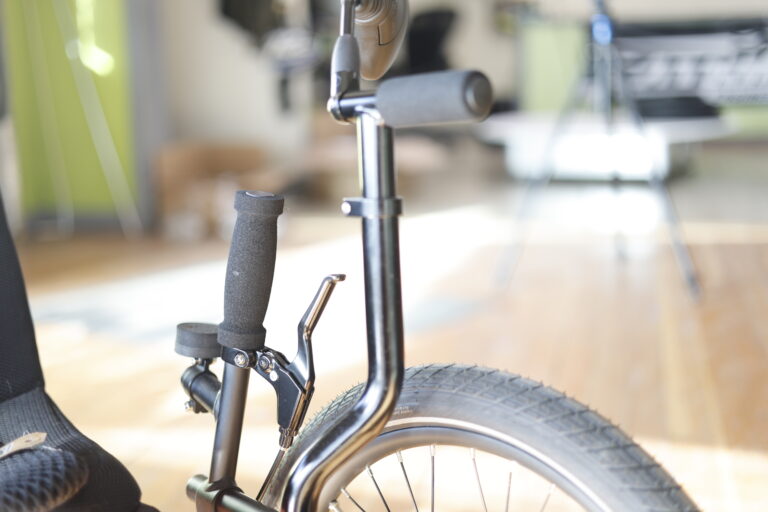
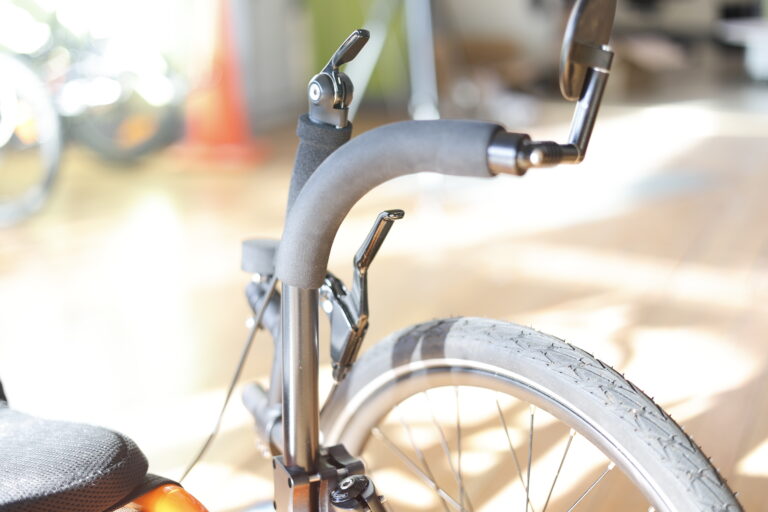
BAR HEIGHT: For the 20 inch drive wheel trikes -Villager, All Road, MAX, Trail and Pocket- the handlebar height is the effective high point. “Effective”, NOT “absolute” because -as we show in our video- you can actually roll the handlebars flat by loosening the two size five hex bolts on each handle bar.
For 26 inch drive wheel trikes -Expedition, 559 and Dumont -and certainly for the 29 inch rear wheel on the 700- Bar Height is never going to be our high point, so not much of a consideration.
By the way, when you roll down the handlebars, you can also roll down the mirror mount -but, often- you don’t have to because it’s not a high point.
Pro Tip: If we’ve installed stand up aids -our own, from TerraCycle or Catrike’s factory option- they CAN then become a high point. Good news, it’s easy to loosen the hex nuts and either roll them down or remove them.
FRAME HEIGHT: For one Adjustable Seat Frame Catrike, the All Road, with the seat folded flat, the Frame Height is the absolute high point. Remember, “Absolute” means we’ve loosened the two five millimeter hex bolts and rolled the handlebars flat.
For one Space Frame Catrike, the Pocket, the frame height is the absolute high point.
For ALL other Cats, FRAME HEIGHT is NOT the absolute high point, so it’s NOT really an important consideration.
WHEEL HEIGHT: This is the height of the rear wheel with the rear fender. For EVERY Catrike except the handlebars-folded All Road and the Pocket, this is going to be the absolute high point. So, this is the critical one to know
REAR RACK: If you add a rear pannier rack, that’s going to be your new absolute high point.
Pro Tip: We offer detachable T-Cycle frame-mounted pannier racks. They NEVER affect trike height. So, if your vehicle is a bit height-challenged, these are PERFECT!
Measuring Your Vehicle
BACK OF FRONT SEAT TO HATCH: Put any rear seats flat. At approximately 14 inches off the car floor (regardless of whether you load your Cat in boom-first or rear wheel first- this is pretty safely where your wheel or seat support is going to strike the length constraints)
LENGTH FROM REAR OF FRONT SEAT TO DASHBOARD: This is how much room you have to roll the trike before
- Boom first: the crank hits the dashboard
- Rear Wheel first: the rear wheel hits the dashboard.
Pay attention to how your hatchback closes. You’ll need enough space to ensure that the pedals don’t bang against the glass if you’re loading rear wheel first
And, if you’re loading in boom first, there has to be enough height that the hatch to clears the rear wheel.
Pro-tip: If you’ve got a significantly-sloped hatchback -what the car industry calls a “liftback”, that absolutely can affect what you can fit. So, if you’ve got a super sloping hatch, close it, climb in and remeasure the lengths at the minimum required height.
WIDTH OF FLOOR BETWEEN WHEEL WELLS: Your Cat’s wheels have to fit between here. This is rarely an issue
WIDTH AT HEIGHT BETWEEN THE WHEEL WELLS: The hubs are one inch wider than the tires. If your wheel wells top out below nine inches, no problem. If they’re taller than nine inches, you’ll need an extra inch to fit your trike
WIDTH BETWEEN THE FRONT SEATS: Whether you’re rolling rear wheels or the front cranks, you need enough room. Fortunately, most modern vehicles have that nice wide console between driver and passenger
Pro tip: For a single trike, width is almost never a problem. But, with the super-wide MAX, it might be.
Also, you might want to roll in two trikes -Ying & Yang. We’ll probably do a video on that soon enough.
INTERIOR HEIGHT: This is generally an easy one. Measure roughly three inches from the center line of the hatch opening. Why not the center? Why three inches? Because if you install a rear pannier rack that sticks out almost three inches on either side, you’ll be glad you thought of this.
Pro-Tips: we’ve already covered this, but it bears repeating, if you have a super-sloped hatch, then maybe the height at the opening ISN’T the real height. You might have to close the hatch, climb back there and figure out where you stop having usable height
Also, some car manufacturers contour the ceiling. So, pay attention to middle seat shoulder harness mounts, air vents and courtesy lights
Loading & Unloading
These methods don’t require great size or great strength. There’s no age limit. We’ve got customers of ALL agres who load and unload their trikes without assistance. One thing that is important is using your judgment. Don’t do anything that feels unsafe. Again, if you’re picking up your trike here at the shop, we are THRILLED to help you practice safe loading and unloading. If you’re ordering from us off the web -something I mentioned before that we’ve started in twenty twenty-six- we’d suggest having somebody with you the first couple times you practice.
You roll the trike in until the crank is well within the cabin, set the parking brakes and close the hatch.
So, you can keep rolling until the rear wheel hits the dashboard or the seat support bumps up against the back of the front seats -both measurements we’ve covered above.
What makes this method best? It all comes back to freedom and independence. If our trikes weigh thirty-five to forty-five pounds -and add another ten if you have a motor (but battery removed)- well, then, you only have to lift half that weight at a time. And, it’s a really ergonomic lift.
Just tip up the rear wheel and dump it on the lip of your vehicle. Then, when you lift the front end of the trike, you’ll only lifting half the weight and you’re doing it ergonomically -which is crucial for your back- and, also, in the most stable way -meaning, you’re never off balance or on one foot.
Rear Wheel Loading
For some people and some vehicles, putting front wheels first is necessary. It can be a bit unwieldy -why it’s generally considered a two person job. So, if you’re doing it alone, be vigilant about how you’re lifting.
Owners of Space Frame or extended boom (i.e. well over 6 foot riders) trike often load front wheels first. Also, our customers who ride as couples often put one trike in front first and the other rear first. Obviously, you need a vehicle big enough for that.
Front Wheels First
Ramps are Magic! Customer Doug loads his MAX into a Jeep.
Mechanic Paul shows loading & unloading the big Dumont is no problem
RAMP LOADING
Mel Demonstrates what happens when you have a sharply-sloped hatchback.
Rear wheel first, No Problem
Front wheels first, Problem
So, remember to account for slope when measuring your hatchback length
RAMP LOADING
What Else?
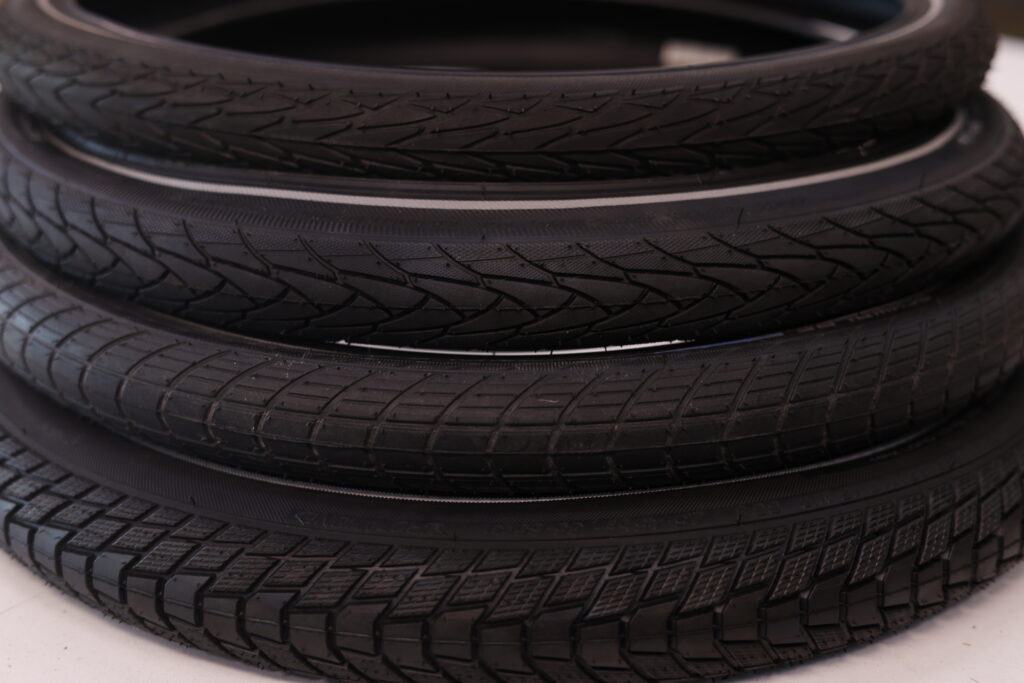
Adding wider tires -like Big Apples or Marathon Plus affects the base width of the trike by up to an inch. Logically, it does NOT affect the width at the hubs
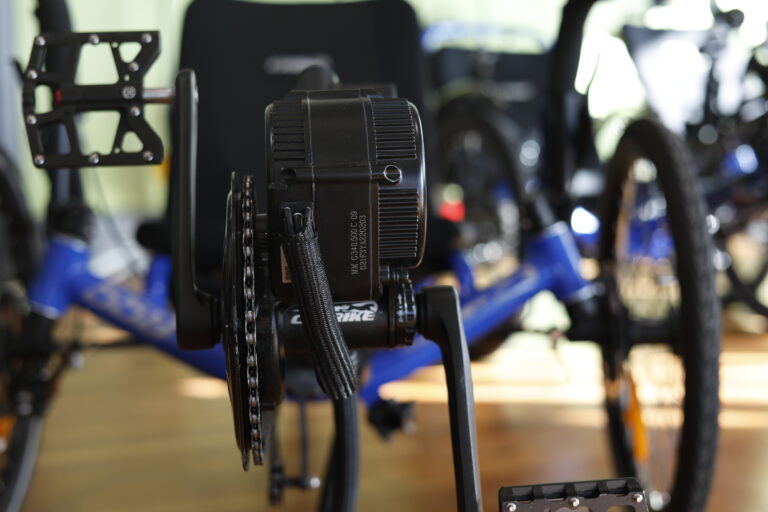
Certain dimensions of your trike can change significantly with a motor kit. For example, that SEAT BOTTOM TO WHEEL measurement -the one that’s crucial for knowing how far the rear wheel of the trike can go between the front seats and toward the dashboard? Well, the battery mounted behind and below the seat might now make the frame too wide to roll all the way to the lower seat support. The good news is you’ll generally get about fifteen inches before the battery bumps against the rear of the front seats and -really- that fifteen inches is generally plenty to allow you to roll into even the smallest hatchbacks


We covered earlier that Assist Arm can be rolled down -or often removed- to load in a vehicle. Like rolling down the steering arms, you need to have a hex tool and it’s going to add five or ten minutes to the beginning and end of your ride, but that’s a small price for being able to take your trike ANYWHERE you want
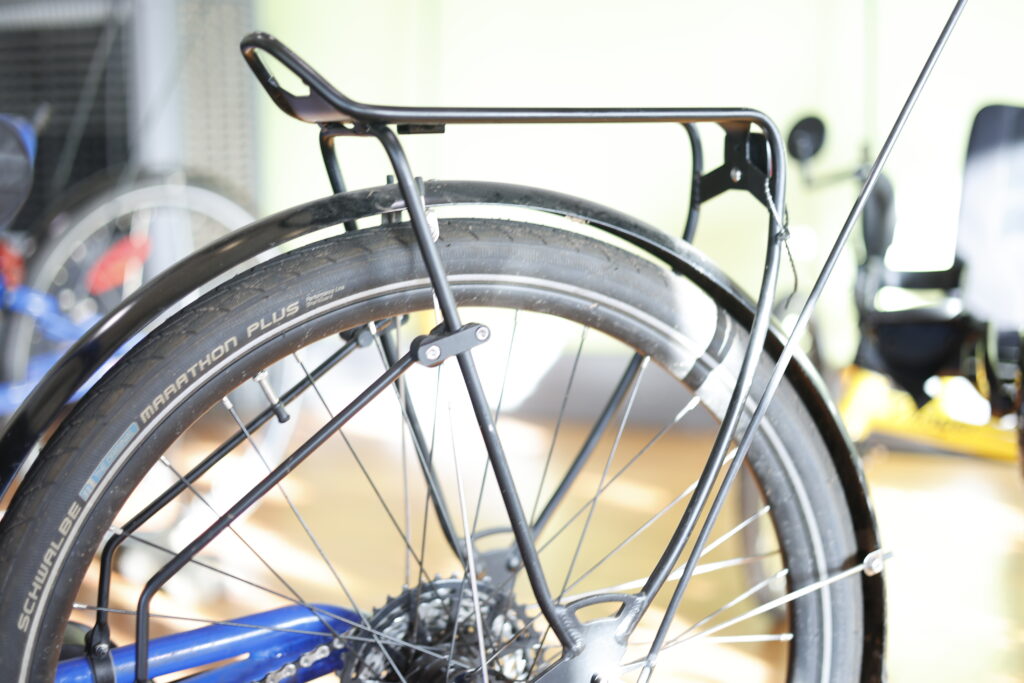
Our rear pannier racks are generally about five inches wide -so narrow-enough to fit between the seats.
But, if you add a rack, that’s now your high point. AND, that high point is now roughly 5 inches wide -so measure your rear opening three inches off center.
For twenty inch rear drive wheel Cats -Villager, All-Road, MAX, Trail and even the adorable little Pocket- your maximum height with a Rear Rack is 27 inches
For twenty six inch wheels -559, Dumont and Expedition- about thirty inches for the maximum height.
The 700? With that huge 29 inch rear wheel? Don’t ruin it by installing a rear rack. And, if you do, figure at least thirty-one inches.
s.
Folding is great for fitting in tight spaces -like the corners of your pickup bed if you’ve got a fifth wheel, dropping in the hold of your sailboat or loading on most commercial airlines. And, also, if you want your trike as small as possible -especially to fit two in the back of a Subaru.
But, this is NOT a lift safely done by one person. For one thing, you have to lift the ENTIRE trike. So, lifting thirty-five to forty-five lbs (another ten lbs for the motor with the battery removed). So, you’re lifting. Then you’re twisting. Then, you’re heaving it to get it on the lip of a vehicle.
So, if there are two of you. Great. No problem. But, for one person, this is not a recommended strategy.
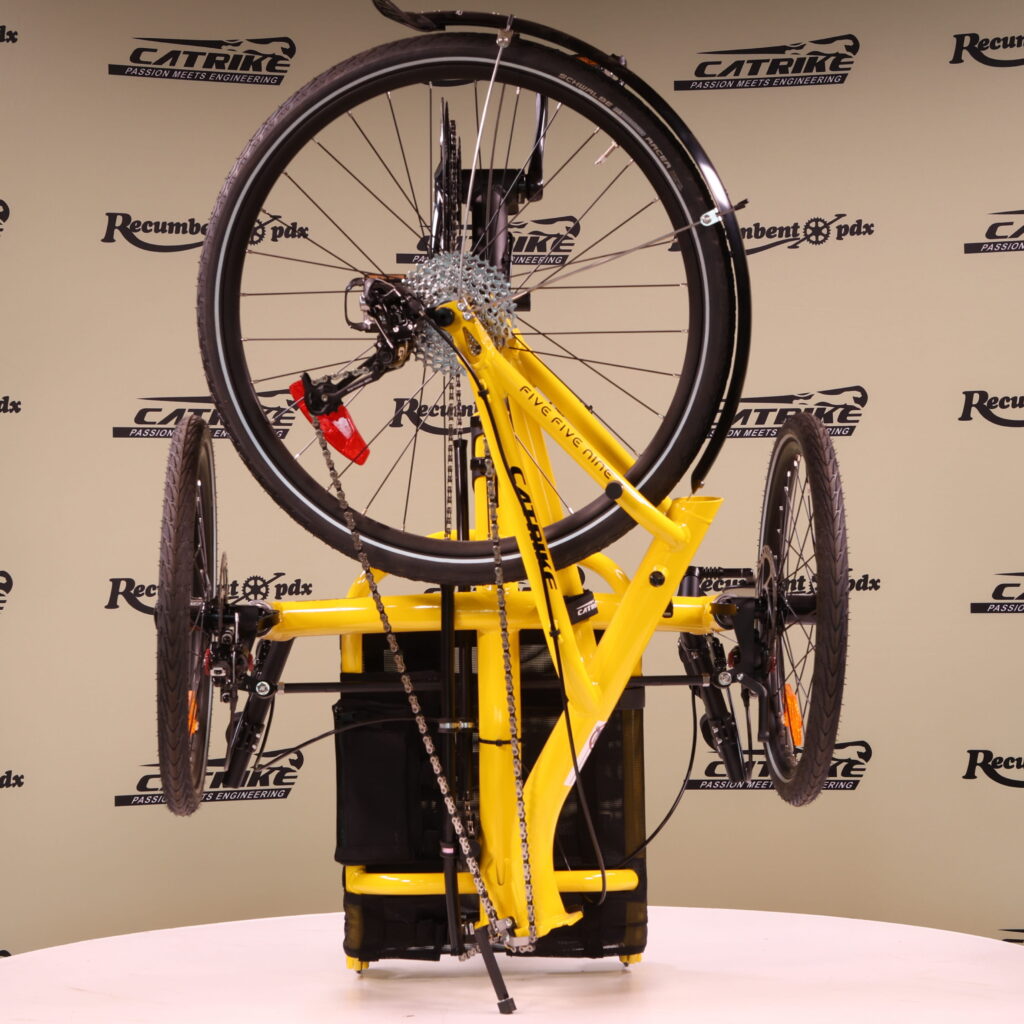
“Yeah”, you think, “I’ll just take off the wheels and shove this thing in the backseat/trunk”. We really do not recommend that. On Catrikes, the disc brakes are completely protected when the front wheels are on. Removing them, risks bumping them out of alignment. That’s not generally going to damage them, but -oh boy!- are you going to be steamed when you can’t get the front wheels back on and you have to schedule one of our mechanics to fix it. Not a big fix. Not an expensive fix. Just an inconvenient fix.
Leave the wheels on where they belong 😉


With factory standard clip in pedals, Cats are about fifteen inches wide. Why is that generally not a problem? The pedals are offset ninety degrees, so -even if you’re loading in boom-first- you can often just wiggle them thru between the front seats.
Some pedals are wider. For example, the total width on our heel supports is nearly twenty inches -that’s five inches wider than the factory standard pedals.
